011. Start with the leak in your current trading week.
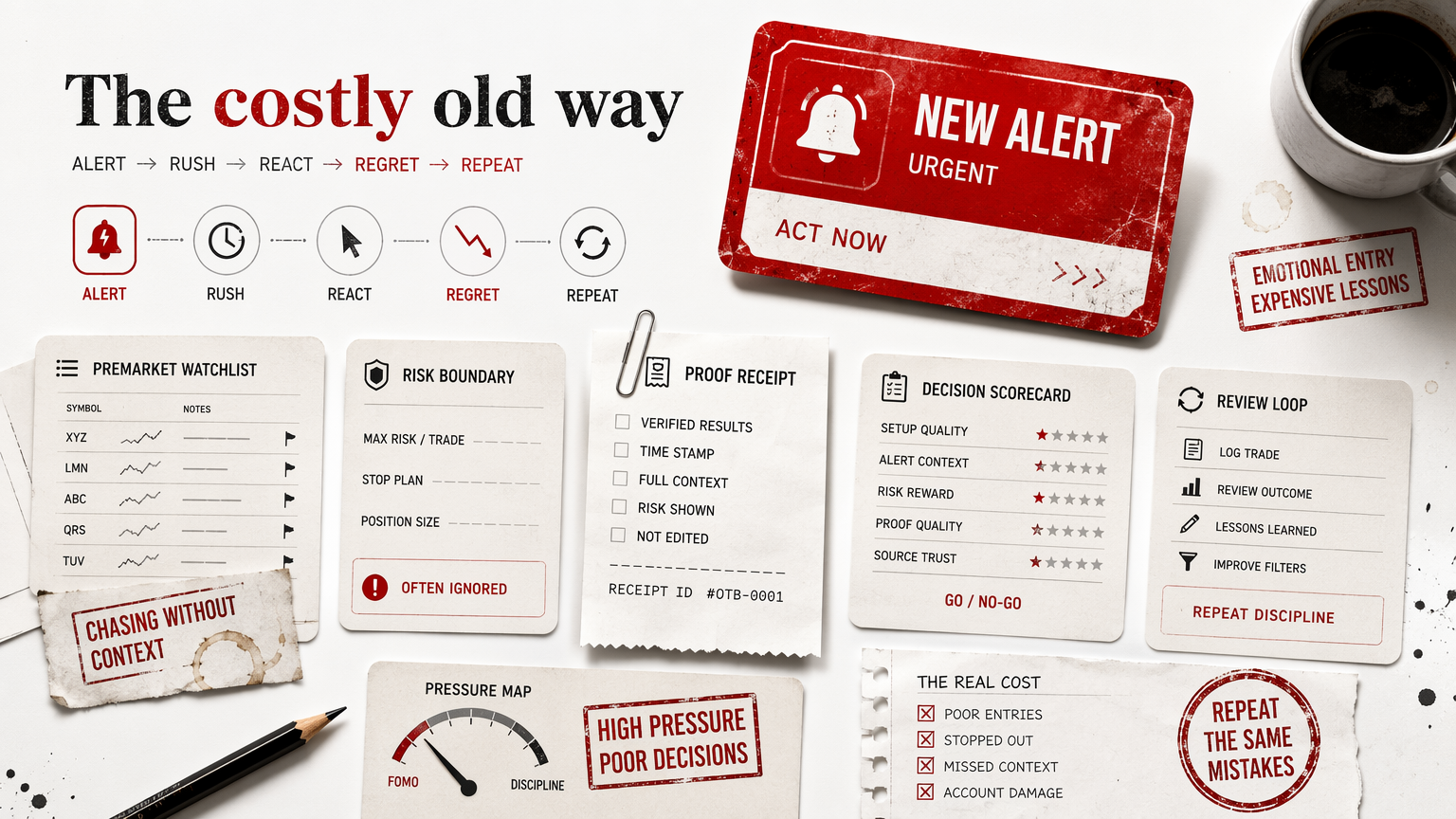
Do not start with the product. Start with the week that is already costing you attention. Maybe you chase late alerts. Maybe you keep too many tickers open. Maybe your journal is empty by Friday. Maybe you ask questions only after the move is over.
Off The Board should be judged against that leak. The question is not whether a trading room sounds active. The question is whether the room can support one behavior you can name and track.
022. Check whether the market focus fits your actual trades.
A room can be good and still wrong for you. Check whether the instruments, session times, alert style, and education depth match the trades you actually take.
If you trade a different schedule or need a different level of explanation, the room may become another feed that you watch without using.
033. Decide how alerts are allowed to influence you.
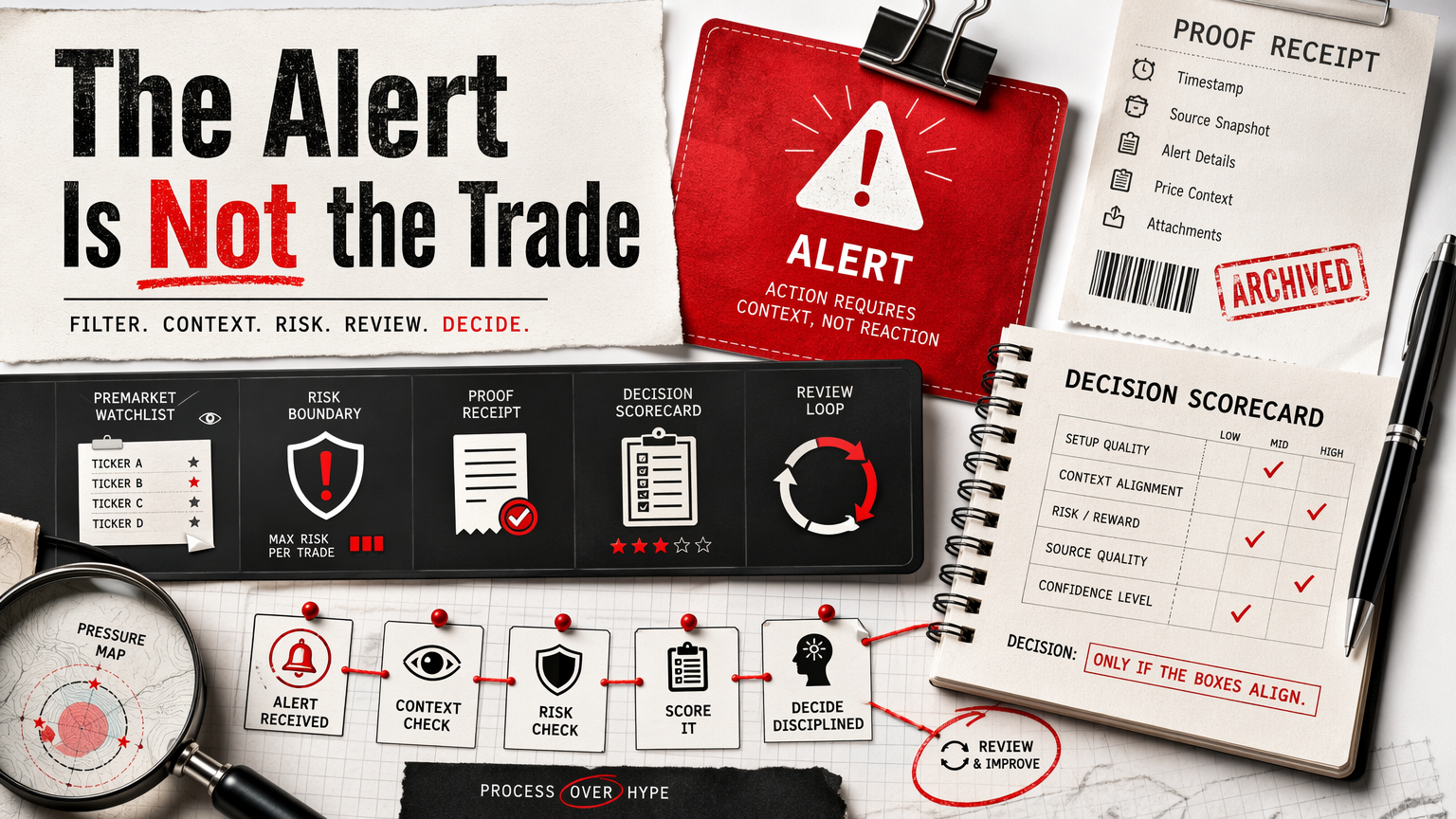
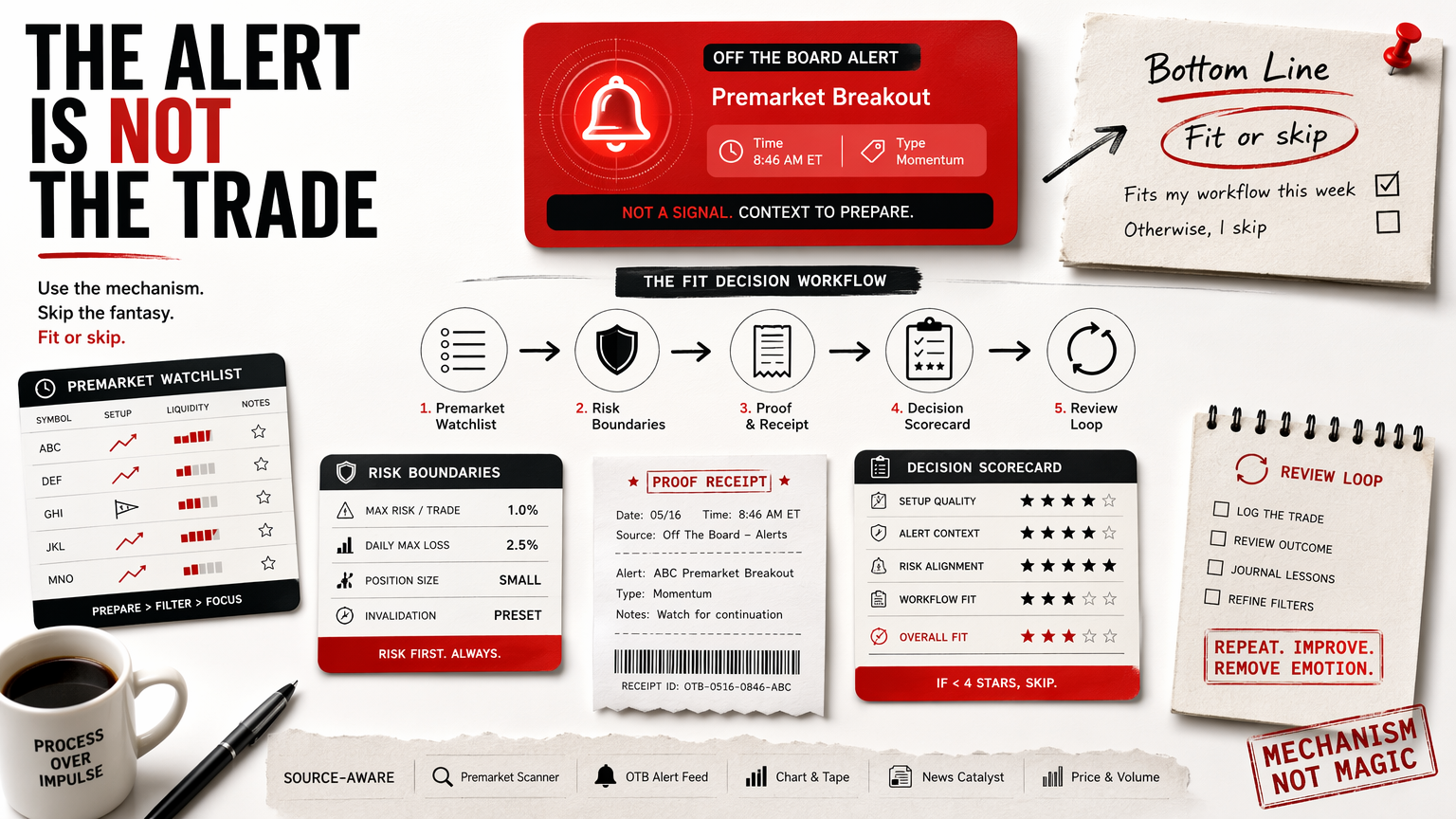
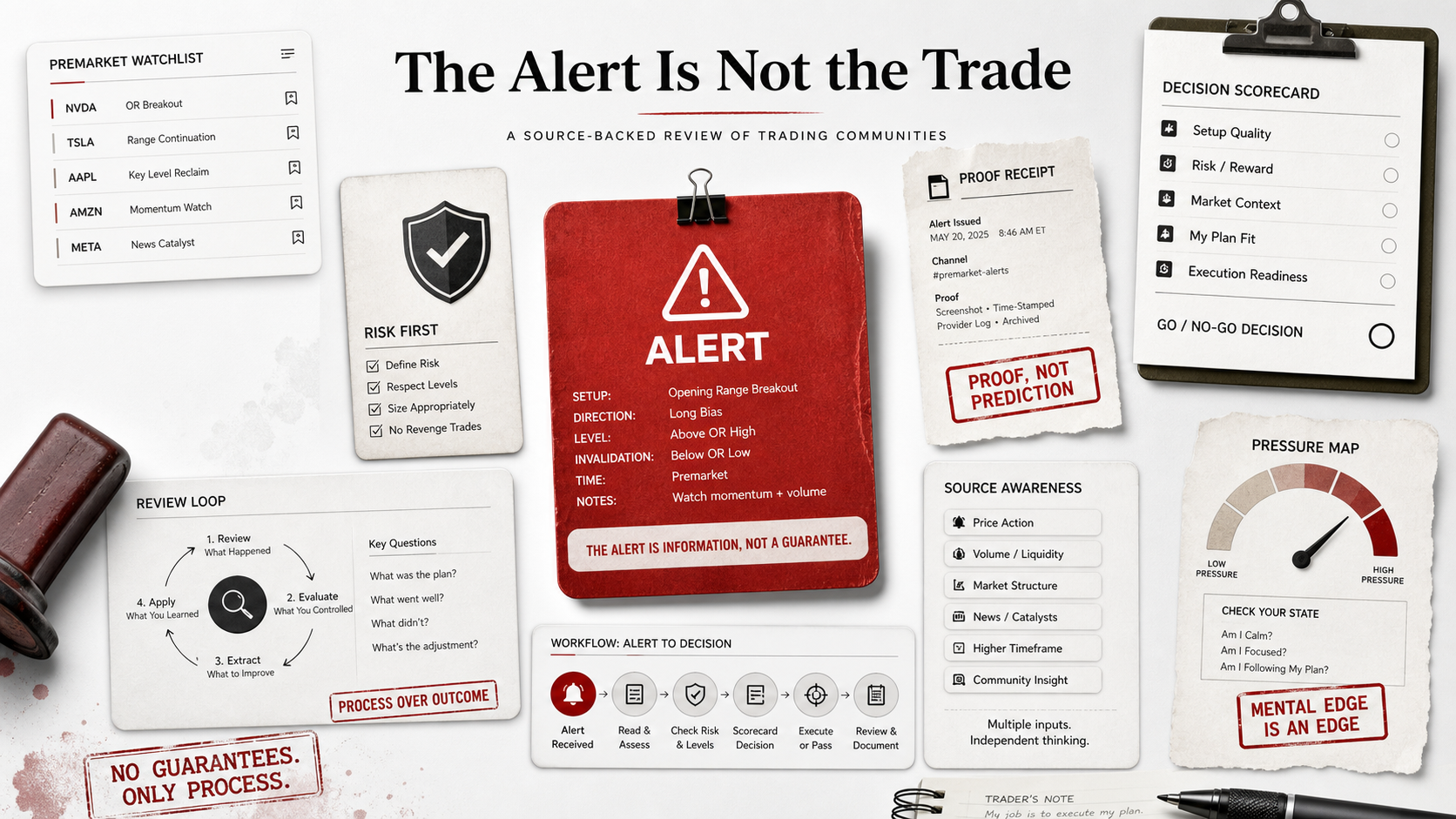
An alert should trigger questions, not obedience. Before acting, you need setup, context, invalidation, size, exit, and a reason to pass.
If you tend to copy quickly, the room needs to make you slower in the right way. If it only makes you feel late, it is not helping the decision.
044. Set up a 30-day review before you buy long term.
Use a simple scorecard: plans written, impulse trades avoided, questions asked, review notes completed, and rules changed by Friday.
The room earns attention when those behaviors improve. If the numbers do not move, the problem is either fit, usage, or expectations.
055. Use the boards as desk checks during the week.
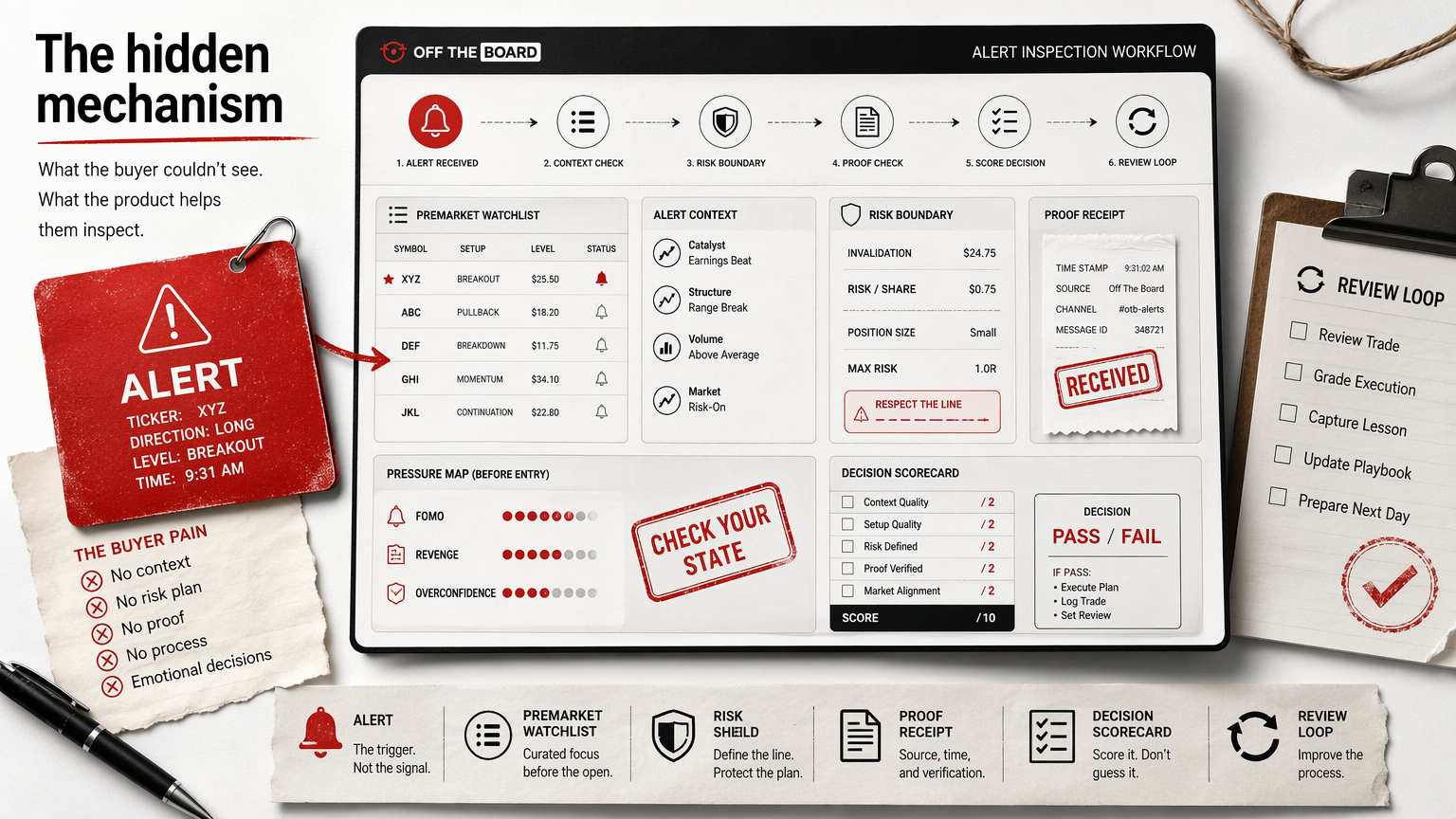
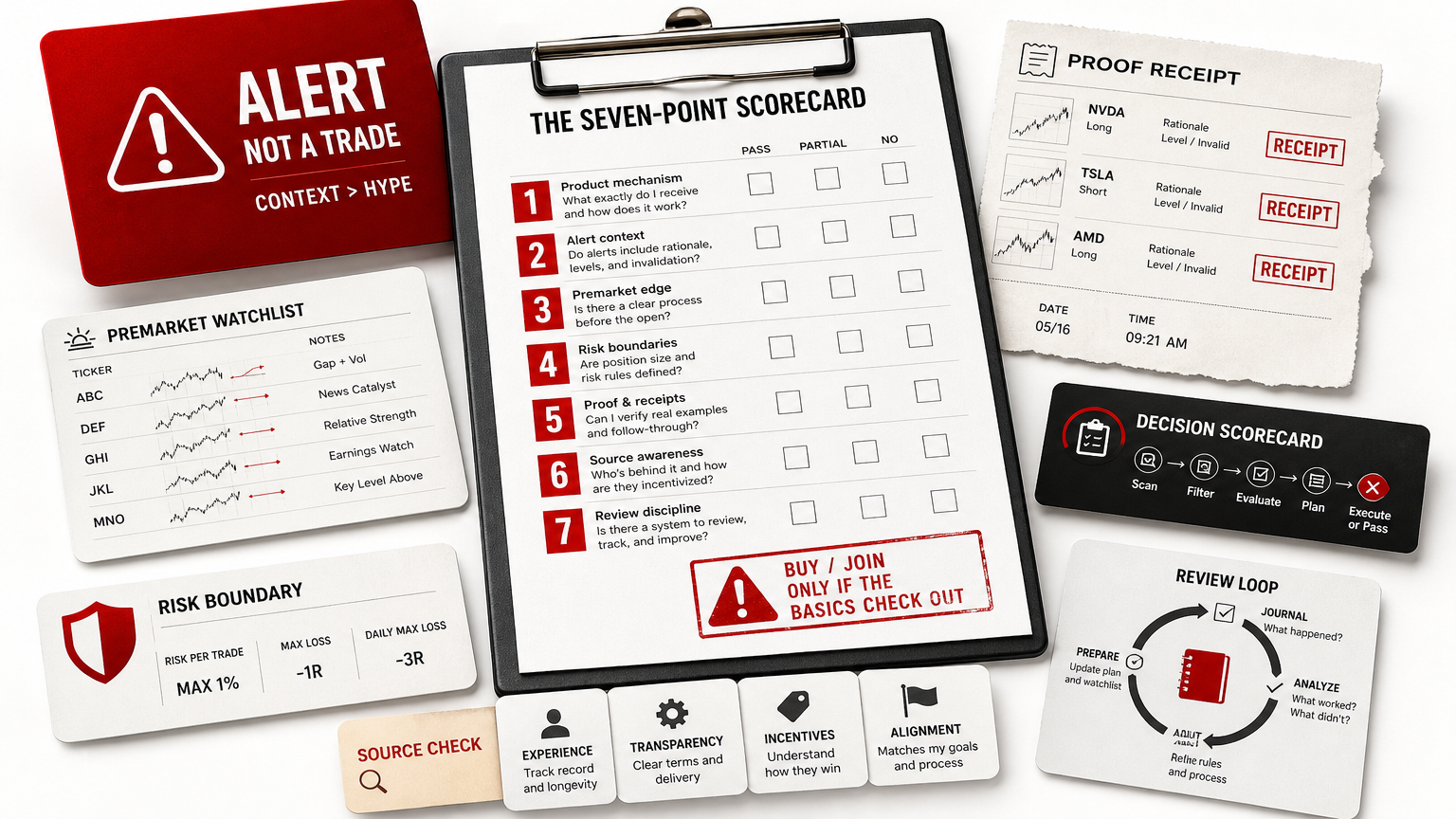
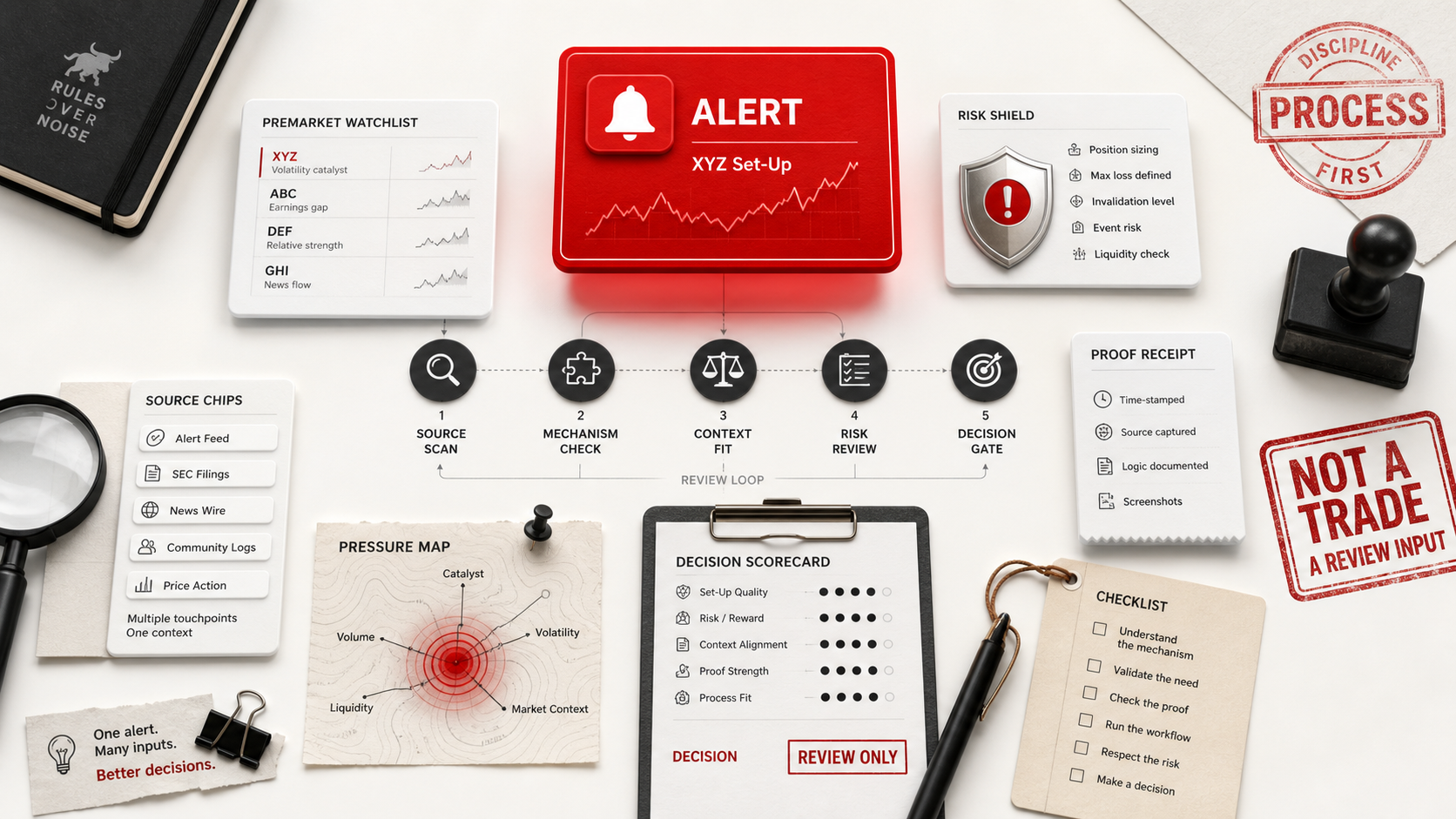
The boards are built for quick checks: alert filter, Discord noise filter, yearly access scorecard, risk-first watchlist, confidence trap, weekly review loop, live terms ledger, room fit map, and no-trade trigger.
Use them before the moment gets emotional. A visible pass condition is easier to follow than a vague reminder to be disciplined.
066. Read the guide that matches the next mistake.
If Discord overload is the problem, read the room workflow guide. If annual access is the question, read the yearly access guide. If you copy alerts too quickly, read the alert evaluation guide before opening the offer.
Each article should help you decide one thing: what behavior would Off The Board need to improve for the purchase to make sense?
077. Verify the live Whop terms before you commit.
The live Whop page should answer what can change: current price, plan names, renewal terms, refund rules, community rules, rating count, and moderation details. Check those details at the source.
Then verify personal fit. Do you trade the same instruments? Are you available when the room is active? Do you want education, alerts, discussion, or review? Can you treat alerts as prompts rather than commands?
088. Final rule: name the behavior first.
Open Off The Board only if you can point to a specific behavior you want to change: entering without invalidation, watching too many tickers, overreacting to chat pressure, skipping weekly review, or failing to write a pass condition before the move starts.
If you cannot name the behavior, do not turn curiosity into checkout. If you can name it, inspect whether the community supports that routine.