
Is the Trading Room Actually Making You Better?
A 30-day way to tell whether a trading community is improving your decisions or just making the week louder.
By Off The Board Research Desk / 1,833 words / 7 visual boards
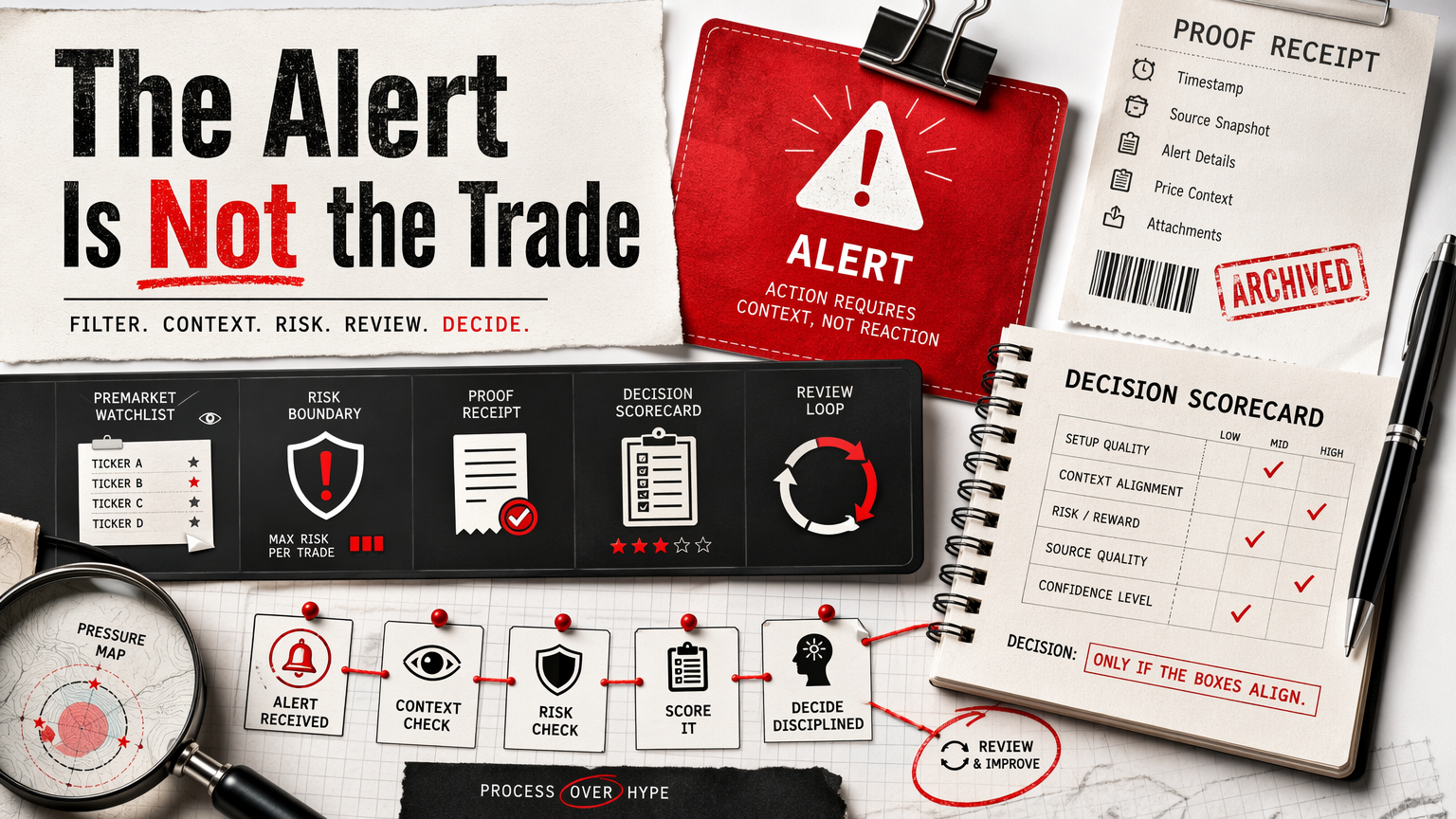
The trap: feeling busy
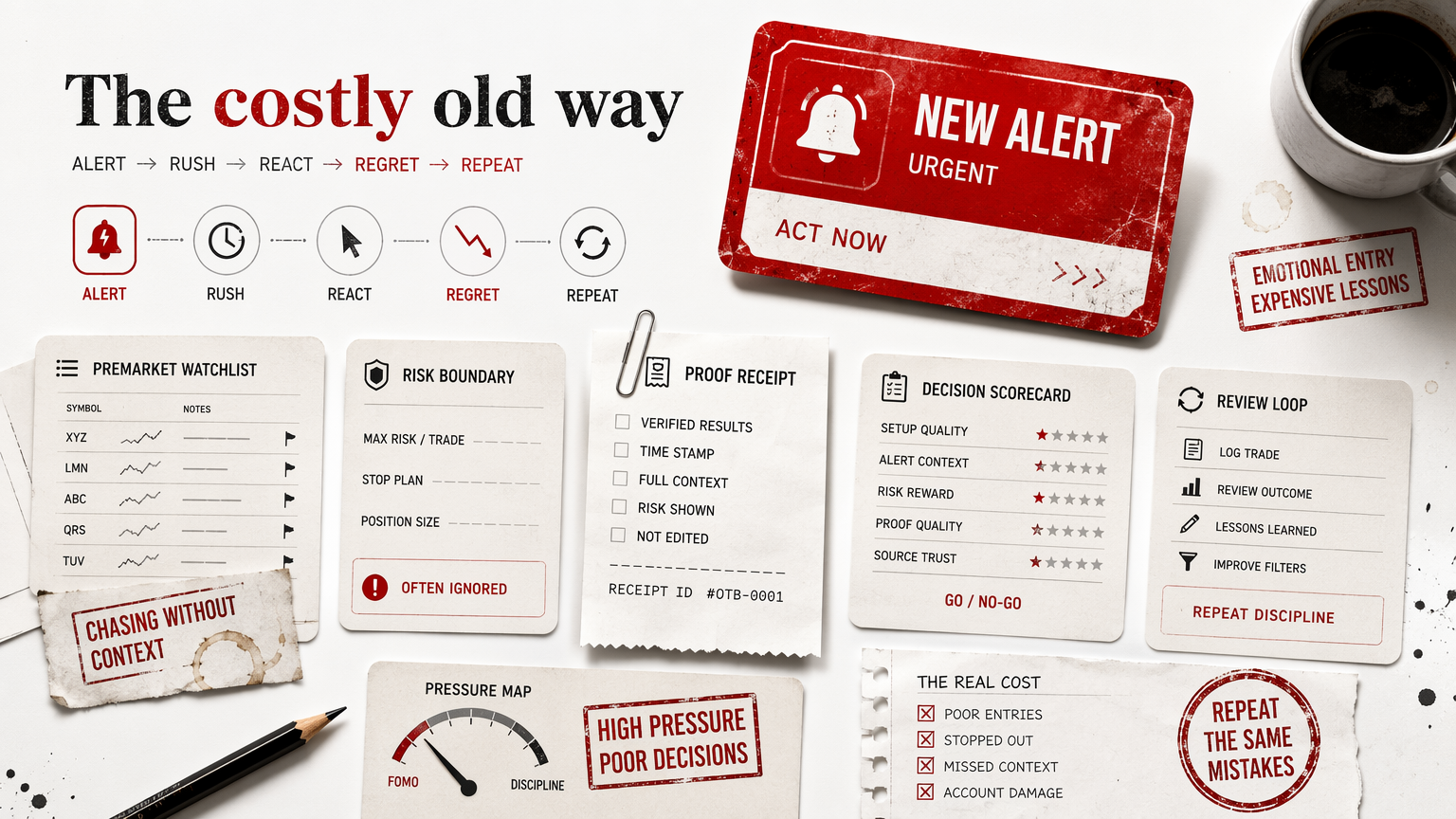
The easiest way to fool yourself inside a trading community is to confuse motion with improvement. You joined more rooms, read more alerts, watched more screenshots, and maybe learned new ticker language. None of that proves your process is better. It only proves your inputs multiplied.
Improvement shows up in quieter places. Did you write the plan before the alert got exciting? Did you pass on the setup that did not match your rules? Did your journal get specific enough that next Friday you can see what changed? A community can help with those things, but only if you measure them directly.
Start with one honest sentence: I am not trying to prove the room is good. I am trying to prove my behavior is cleaner with the room than without it. That sentence changes the whole review. You stop judging the community by dopamine and start judging it by whether it makes your next decision less sloppy.
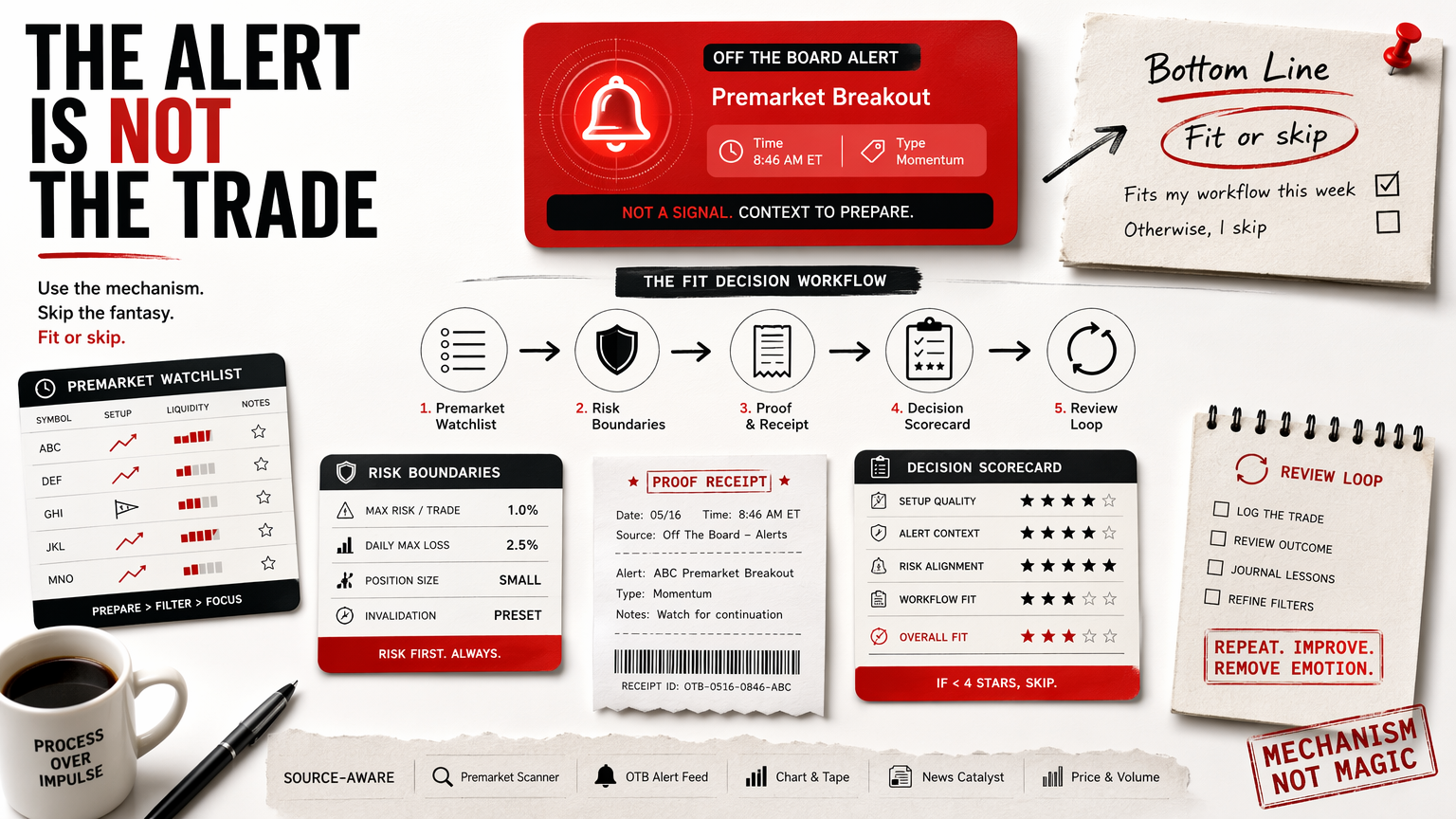
Write down the before picture
Before the next thirty days start, write down the current state of your trading week. How many trades did you take without a written invalidation level? How often did you enter because the chat moved faster than your checklist? How many review notes did you actually finish after the close?
The baseline does not need to be elegant. It needs to be true. One page is enough: date, ticker, plan written before entry, reason for entry, invalidation, size, exit idea, whether the trade came from an alert, and one sentence after the trade. If those fields feel annoying, that is useful information. The annoyance is showing you where the process currently leaks.
Do not use profit as the baseline for this test. Profit matters, but it is too noisy for a short community review. Use behavior first. A cleaner plan, fewer impulse entries, better questions, and a completed journal tell you whether the room is improving the way decisions are made.
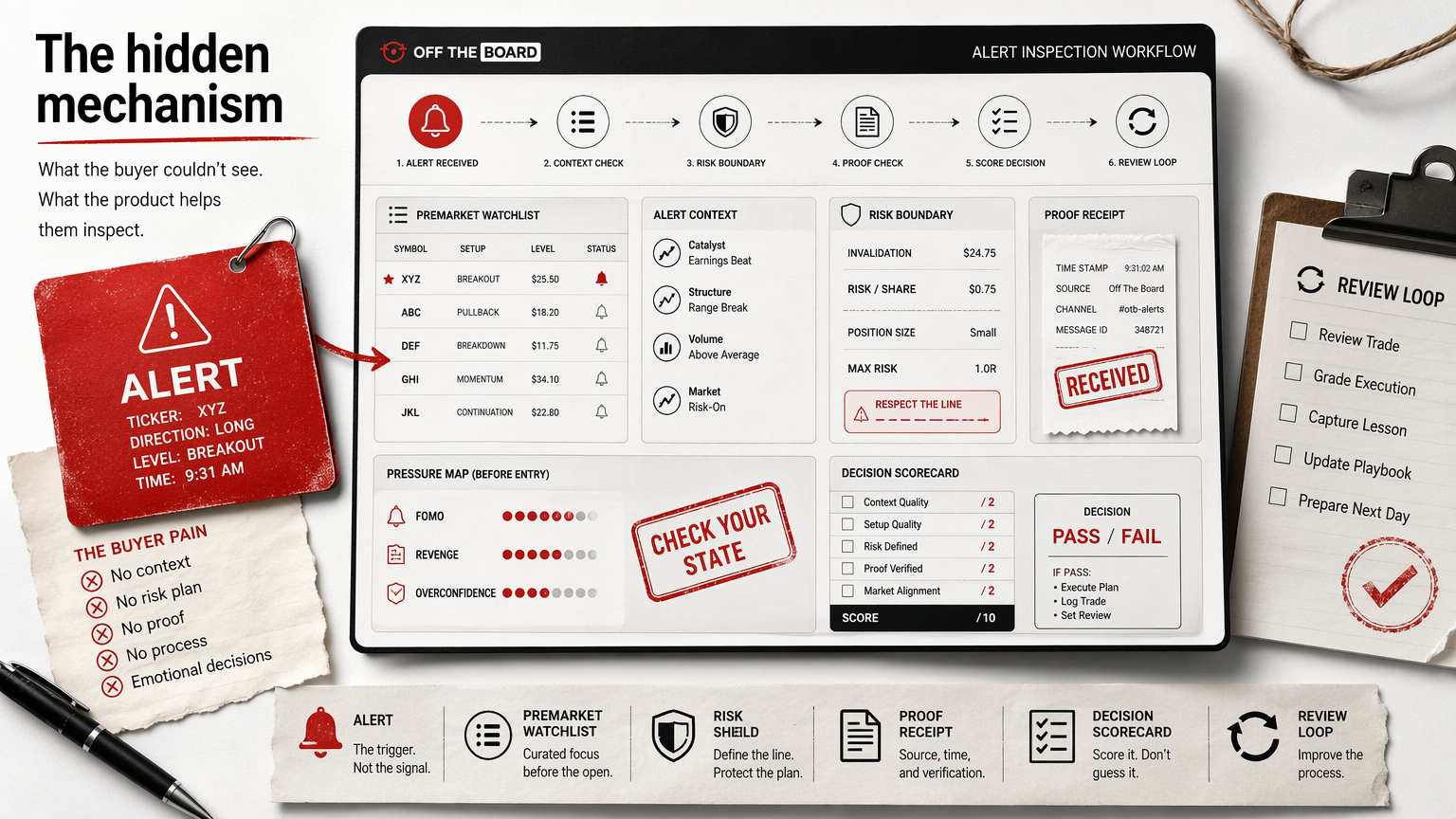
Four numbers worth tracking
Track plans written, impulse trades avoided, review notes completed, and questions asked. Those four numbers are boring in the right way. They do not flatter you. They do not turn one lucky trade into a personality. They show whether the community is changing the work around the trade.
A plan written means the trade had a thesis before action. An impulse trade avoided means the room did not hijack your hand. A review note completed means the decision turned into feedback. A question asked means you used the community as a thinking tool, not only as a signal feed.
Put the four numbers somewhere visible at the end of each week. Week one is the shock. Week two is the adjustment. Week three is where excuses get obvious. Week four is enough time to see whether the community helped you build a repeatable loop or simply gave you more material to consume.
The Friday review
The weekly review should be short enough that you actually do it. Pick three trades, two passed alerts, and one moment where chat pressure changed your behavior. Do not write a novel. Write the rule that would have made the decision cleaner.
This is where Off The Board, or any trading community, has to earn attention. Did the room give you context that improved the plan? Did it help you ask a better question? Did it make you more patient before entry? Or did it mostly add more urgency to a week that already had enough?
A useful review ends with one rule for the next week. Not ten lessons. One rule. For example: no entry without invalidation written first; no alert trade in the first five minutes after seeing it; no size increase unless the setup was on the premarket list. Small rules are easier to obey than dramatic promises.
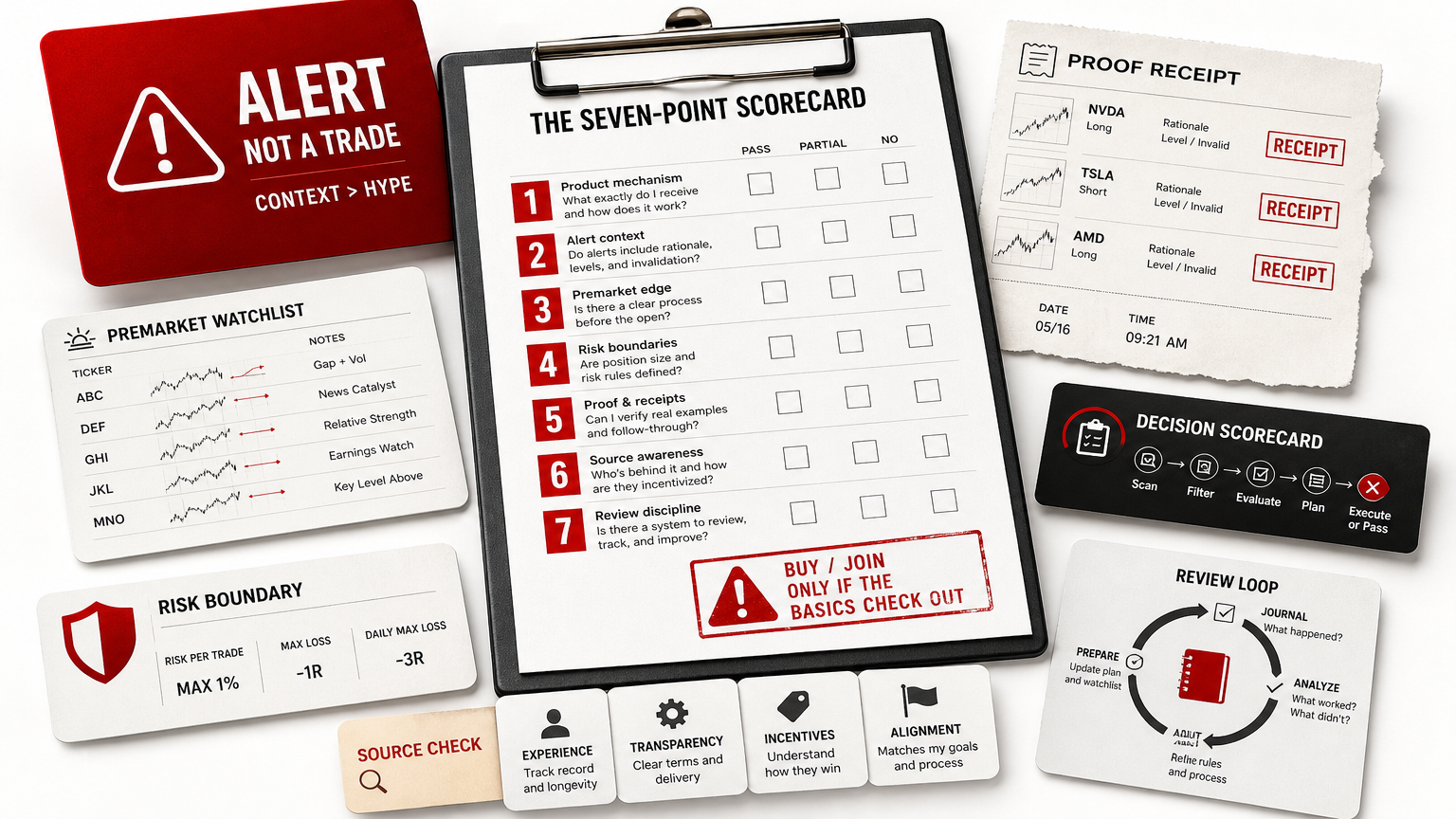
The 30-day keep-or-cut call
At the end of thirty days, do not ask whether you liked the community. Ask whether your tracked behavior changed. Compare the baseline to the final week. If plans written went up, impulse trades went down, review notes became more specific, and questions improved, the room is doing something real for your process.
If the numbers did not move, be honest. Maybe the community is not the right fit. Maybe you used it passively. Maybe the timing, asset focus, or alert style does not match your actual trading week. That does not require drama. It requires a cleaner decision.
The point of the thirty-day review is to keep the buying decision grounded. You are not trying to become a fan. You are trying to decide whether access changes the work. If it changes the work, continued access has a case. If it does not, the tab can close.
When yearly access makes sense
Yearly access should not be justified by a discount alone. A discount on something you do not use is still waste. The better logic is schedule plus behavior. Do you have a weekly use case for the room? Do you know which sessions you will attend, which alerts you will study, and which review habit the community supports?
If the thirty-day behavior review is strong, yearly access becomes a practical question. Will the same loop matter for the next quarter? Can you keep showing up without turning the room into a source of pressure? Does the community fit the instruments, hours, and skill level you actually trade?
If those answers are vague, stay shorter-term or keep researching. The yearly decision should feel boring and earned. It should sound like: this tool supports a behavior I already proved I will repeat.
Metrics that lie to you
Bad metrics are the ones that make you feel smart without changing anything. Hours in Discord. Number of alerts seen. Screenshots saved. Messages read. New indicators collected. Those can all increase while your decision quality stays exactly the same.
Another bad metric is emotional certainty. Feeling more confident after joining a room does not mean the process improved. Confidence can rise because the room is useful, but it can also rise because other people sound sure. That is why the journal matters. It slows confidence down and forces it to show its work.
Use metrics that leave receipts. A written plan is a receipt. A passed trade with a reason is a receipt. A review note with a rule change is a receipt. A specific question asked before entry is a receipt. Those are the signals worth keeping.
The rule I would use
Use the simplest possible rule: keep the community only if it makes your trading week more reviewable. If the room helps you prepare before alerts, ask better questions, avoid weaker trades, and write clearer post-trade notes, it has a real job. If it only makes the day louder, it does not.
This rule also protects the offer from hype. You are not asking Off The Board to be magic. You are asking whether it supports a process you can measure. That is a fairer test and a more useful buying frame.
The final sentence should be practical: I know what I am tracking, I know what improvement looks like, and I know when I would stop. If you cannot finish that sentence, keep reading before opening the offer.
Before you open the offer
Decide what number would make the next thirty days worth it. Maybe it is ten written plans. Maybe it is five avoided impulse trades. Maybe it is four completed Friday reviews. Pick the number before you click, because the whole point is to stop judging trading tools by mood.
If Off The Board looks like it can support that behavior, inspect it with the scorecard. If you cannot name the behavior, keep the tab closed for now. A trading room should make the week more reviewable, not just more stimulating.
FAQ
Should I track profit only?
No. Profit matters, but behavior quality is easier to audit and safer to discuss.
How long should I test a community?
Use a focused 30-day behavior review before drawing conclusions.
What is a bad sign?
Consuming more while planning, reviewing, and risking less carefully.