
What Is a Trading Alert Community Actually For?
The alert is not the whole product. This guide explains what a trading community should do before, during, and after an alert.
By Off The Board Research Desk / 2,873 words / 7 visual boards
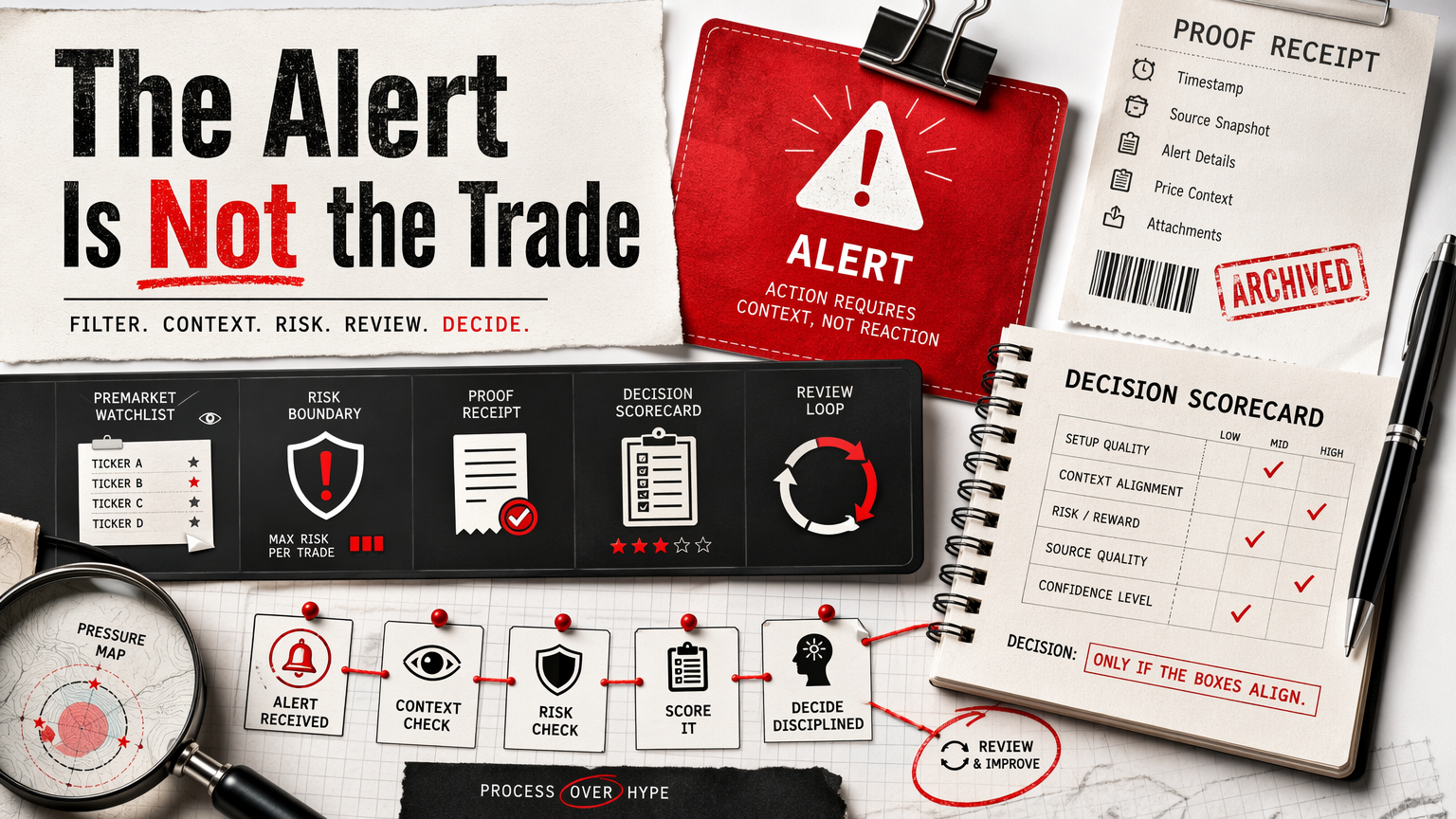
The alert is only one input
If this topic matters, it is probably because the trading day already feels noisy. The notification lands, everyone reacts, the ticker is moving, and room excitement starts to feel like a personal trading plan. That moment is where the work starts, because a better decision has to happen before the trade becomes a line in a journal.
The trap is simple: The alert is the whole product. It sounds believable because alerts, rooms, education, and watchlists can help. The problem starts when one input gets treated like a complete plan. The better belief is stricter: The product is the decision support around the alert: context before, discipline during, and review after.
Use a shared workflow for setup context, invalidation, market conditions, risk discussion, and post-trade learning as the test. Does it improve alert? Does it clarify context? Does it create a better boundary around trade thesis? If those answers are weak, keep reading before you inspect the offer.
The line to remember: Speed without context raises pressure. Put that sentence beside the next alert, Discord thread, or watchlist note. If it changes what you write down before acting, the idea is doing real work.
Run a quick audit: name the old behavior, write the question that slows the decision, decide what would make you pass, and choose the next guide only if it answers the blocker you actually have.
- Old behavior: the habit that makes the current workflow expensive.
- New filter: the question that slows the decision before money is at risk.
- Pass condition: the reason to sit out when the setup stays vague.
- Next guide: the article that matches the blocker in front of you.
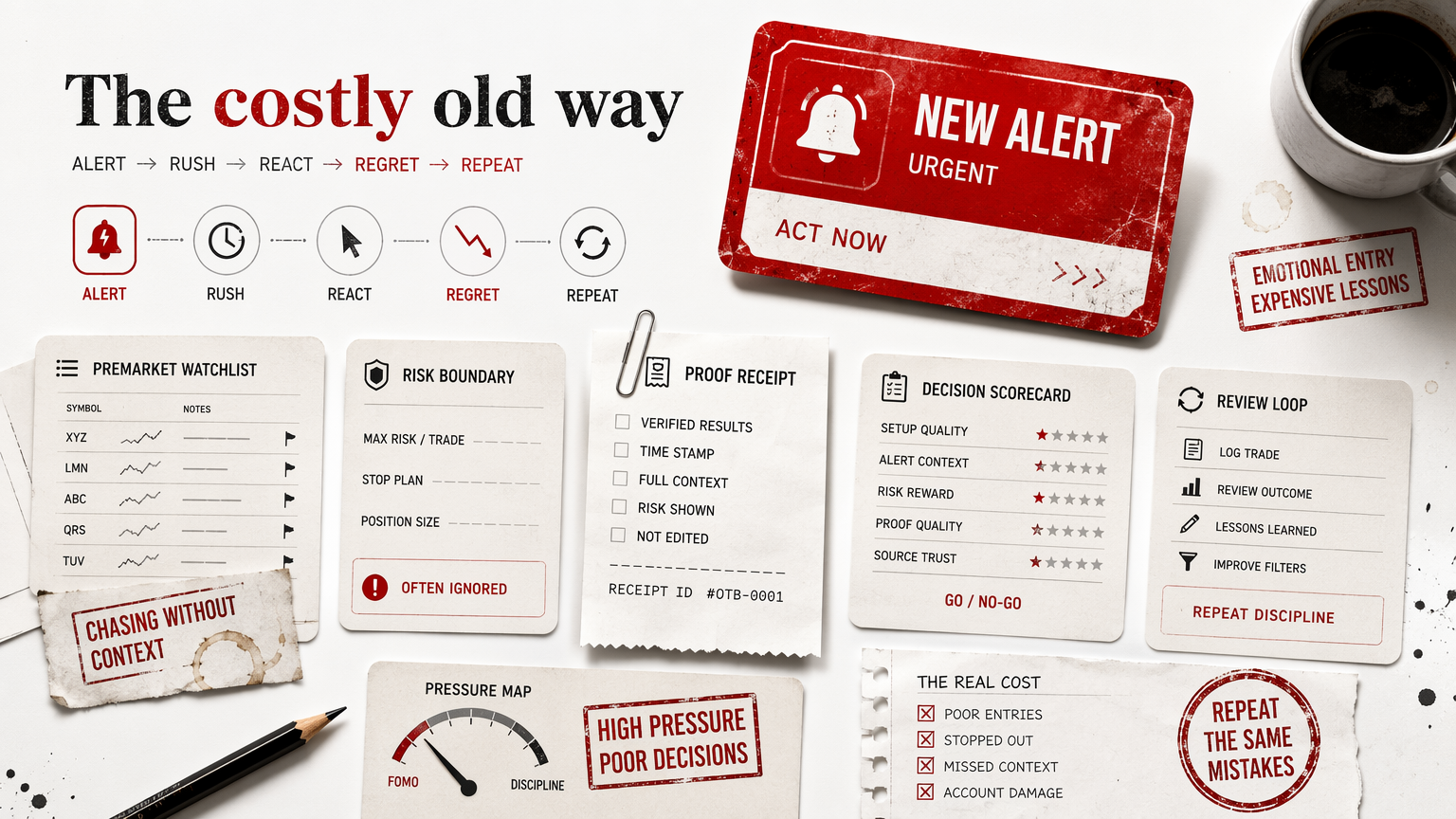
Context before speed
If this topic matters, it is probably because the trading day already feels noisy. The notification lands, everyone reacts, the ticker is moving, and room excitement starts to feel like a personal trading plan. That moment is where the work starts, because a better decision has to happen before the trade becomes a line in a journal.
The trap is simple: The alert is the whole product. It sounds believable because alerts, rooms, education, and watchlists can help. The problem starts when one input gets treated like a complete plan. The better belief is stricter: The product is the decision support around the alert: context before, discipline during, and review after.
Use a shared workflow for setup context, invalidation, market conditions, risk discussion, and post-trade learning as the test. Does it improve setup? Does it clarify room discussion? Does it create a better boundary around execution? If those answers are weak, keep reading before you inspect the offer.
The line to remember: A good room changes the question before it changes the trade. Put that sentence beside the next alert, Discord thread, or watchlist note. If it changes what you write down before acting, the idea is doing real work.
Run a quick audit: name the old behavior, write the question that slows the decision, decide what would make you pass, and choose the next guide only if it answers the blocker you actually have.
- Old behavior: the habit that makes the current workflow expensive.
- New filter: the question that slows the decision before money is at risk.
- Pass condition: the reason to sit out when the setup stays vague.
- Next guide: the article that matches the blocker in front of you.
Discussion versus noise
If this topic matters, it is probably because the trading day already feels noisy. The notification lands, everyone reacts, the ticker is moving, and room excitement starts to feel like a personal trading plan. That moment is where the work starts, because a better decision has to happen before the trade becomes a line in a journal.
The trap is simple: The alert is the whole product. It sounds believable because alerts, rooms, education, and watchlists can help. The problem starts when one input gets treated like a complete plan. The better belief is stricter: The product is the decision support around the alert: context before, discipline during, and review after.
Use a shared workflow for setup context, invalidation, market conditions, risk discussion, and post-trade learning as the test. Does it improve context? Does it clarify trade thesis? Does it create a better boundary around review loop? If those answers are weak, keep reading before you inspect the offer.
The line to remember: Discussion is useful only when it clarifies the plan. Put that sentence beside the next alert, Discord thread, or watchlist note. If it changes what you write down before acting, the idea is doing real work.
Run a quick audit: name the old behavior, write the question that slows the decision, decide what would make you pass, and choose the next guide only if it answers the blocker you actually have.
- Old behavior: the habit that makes the current workflow expensive.
- New filter: the question that slows the decision before money is at risk.
- Pass condition: the reason to sit out when the setup stays vague.
- Next guide: the article that matches the blocker in front of you.
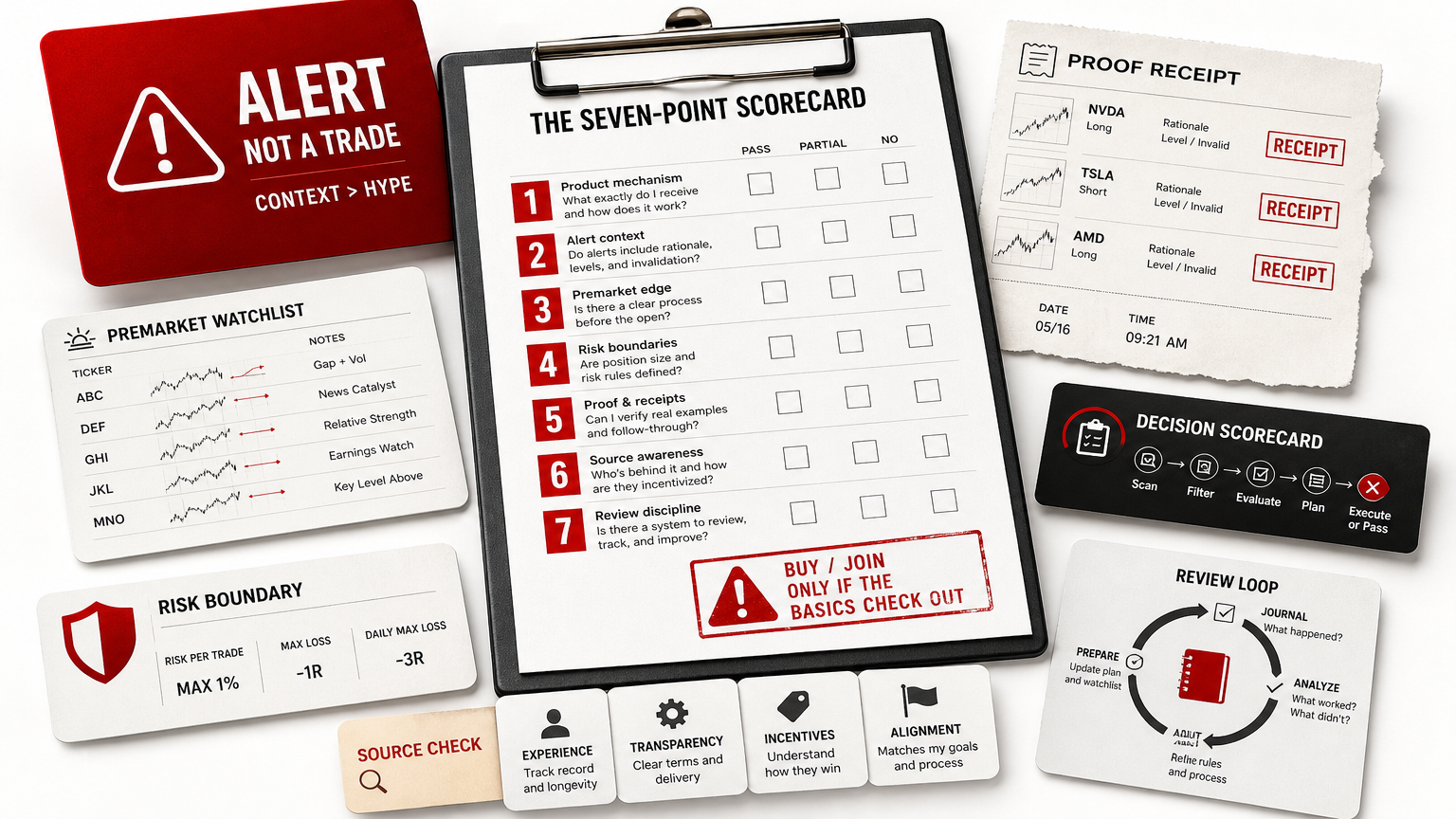
The review loop
If this topic matters, it is probably because the trading day already feels noisy. The notification lands, everyone reacts, the ticker is moving, and room excitement starts to feel like a personal trading plan. That moment is where the work starts, because a better decision has to happen before the trade becomes a line in a journal.
The trap is simple: The alert is the whole product. It sounds believable because alerts, rooms, education, and watchlists can help. The problem starts when one input gets treated like a complete plan. The better belief is stricter: The product is the decision support around the alert: context before, discipline during, and review after.
Use a shared workflow for setup context, invalidation, market conditions, risk discussion, and post-trade learning as the test. Does it improve room discussion? Does it clarify execution? Does it create a better boundary around risk boundary? If those answers are weak, keep reading before you inspect the offer.
The line to remember: Review converts alerts into education. Put that sentence beside the next alert, Discord thread, or watchlist note. If it changes what you write down before acting, the idea is doing real work.
Run a quick audit: name the old behavior, write the question that slows the decision, decide what would make you pass, and choose the next guide only if it answers the blocker you actually have.
- Old behavior: the habit that makes the current workflow expensive.
- New filter: the question that slows the decision before money is at risk.
- Pass condition: the reason to sit out when the setup stays vague.
- Next guide: the article that matches the blocker in front of you.
What a good room helps you ignore
If this topic matters, it is probably because the trading day already feels noisy. The notification lands, everyone reacts, the ticker is moving, and room excitement starts to feel like a personal trading plan. That moment is where the work starts, because a better decision has to happen before the trade becomes a line in a journal.
The trap is simple: The alert is the whole product. It sounds believable because alerts, rooms, education, and watchlists can help. The problem starts when one input gets treated like a complete plan. The better belief is stricter: The product is the decision support around the alert: context before, discipline during, and review after.
Use a shared workflow for setup context, invalidation, market conditions, risk discussion, and post-trade learning as the test. Does it improve trade thesis? Does it clarify review loop? Does it create a better boundary around alert? If those answers are weak, keep reading before you inspect the offer.
The line to remember: Speed without context raises pressure. Put that sentence beside the next alert, Discord thread, or watchlist note. If it changes what you write down before acting, the idea is doing real work.
Run a quick audit: name the old behavior, write the question that slows the decision, decide what would make you pass, and choose the next guide only if it answers the blocker you actually have.
- Old behavior: the habit that makes the current workflow expensive.
- New filter: the question that slows the decision before money is at risk.
- Pass condition: the reason to sit out when the setup stays vague.
- Next guide: the article that matches the blocker in front of you.
The community fit test
If this topic matters, it is probably because the trading day already feels noisy. The notification lands, everyone reacts, the ticker is moving, and room excitement starts to feel like a personal trading plan. That moment is where the work starts, because a better decision has to happen before the trade becomes a line in a journal.
The trap is simple: The alert is the whole product. It sounds believable because alerts, rooms, education, and watchlists can help. The problem starts when one input gets treated like a complete plan. The better belief is stricter: The product is the decision support around the alert: context before, discipline during, and review after.
Use a shared workflow for setup context, invalidation, market conditions, risk discussion, and post-trade learning as the test. Does it improve execution? Does it clarify risk boundary? Does it create a better boundary around setup? If those answers are weak, keep reading before you inspect the offer.
The line to remember: A good room changes the question before it changes the trade. Put that sentence beside the next alert, Discord thread, or watchlist note. If it changes what you write down before acting, the idea is doing real work.
Run a quick audit: name the old behavior, write the question that slows the decision, decide what would make you pass, and choose the next guide only if it answers the blocker you actually have.
- Old behavior: the habit that makes the current workflow expensive.
- New filter: the question that slows the decision before money is at risk.
- Pass condition: the reason to sit out when the setup stays vague.
- Next guide: the article that matches the blocker in front of you.
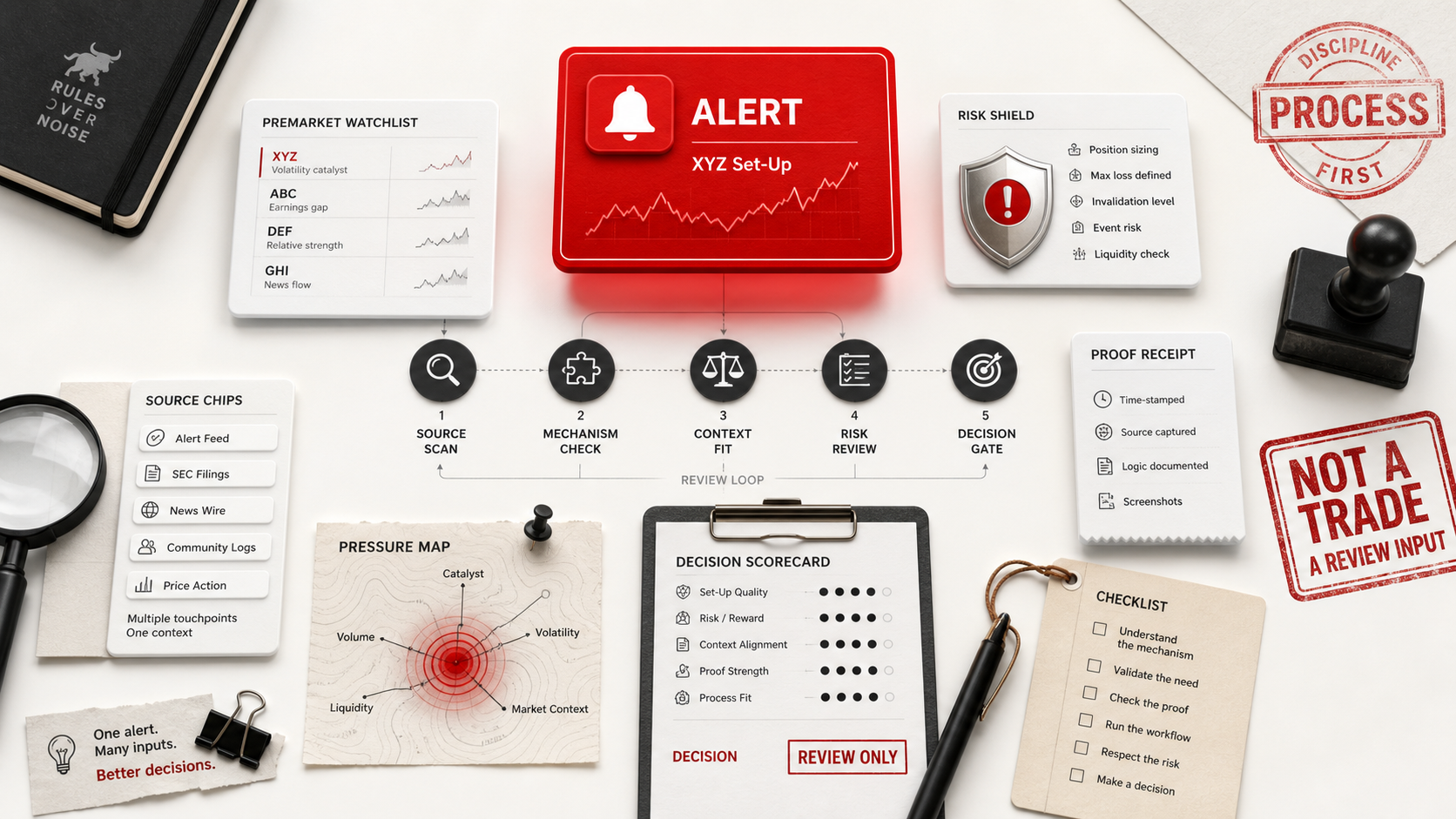
Where Off The Board fits
If this topic matters, it is probably because the trading day already feels noisy. The notification lands, everyone reacts, the ticker is moving, and room excitement starts to feel like a personal trading plan. That moment is where the work starts, because a better decision has to happen before the trade becomes a line in a journal.
The trap is simple: The alert is the whole product. It sounds believable because alerts, rooms, education, and watchlists can help. The problem starts when one input gets treated like a complete plan. The better belief is stricter: The product is the decision support around the alert: context before, discipline during, and review after.
Use a shared workflow for setup context, invalidation, market conditions, risk discussion, and post-trade learning as the test. Does it improve review loop? Does it clarify alert? Does it create a better boundary around context? If those answers are weak, keep reading before you inspect the offer.
The line to remember: Discussion is useful only when it clarifies the plan. Put that sentence beside the next alert, Discord thread, or watchlist note. If it changes what you write down before acting, the idea is doing real work.
Run a quick audit: name the old behavior, write the question that slows the decision, decide what would make you pass, and choose the next guide only if it answers the blocker you actually have.
- Old behavior: the habit that makes the current workflow expensive.
- New filter: the question that slows the decision before money is at risk.
- Pass condition: the reason to sit out when the setup stays vague.
- Next guide: the article that matches the blocker in front of you.
Decision rule
If this topic matters, it is probably because the trading day already feels noisy. The notification lands, everyone reacts, the ticker is moving, and room excitement starts to feel like a personal trading plan. That moment is where the work starts, because a better decision has to happen before the trade becomes a line in a journal.
The trap is simple: The alert is the whole product. It sounds believable because alerts, rooms, education, and watchlists can help. The problem starts when one input gets treated like a complete plan. The better belief is stricter: The product is the decision support around the alert: context before, discipline during, and review after.
Use a shared workflow for setup context, invalidation, market conditions, risk discussion, and post-trade learning as the test. Does it improve risk boundary? Does it clarify setup? Does it create a better boundary around room discussion? If those answers are weak, keep reading before you inspect the offer.
The line to remember: Review converts alerts into education. Put that sentence beside the next alert, Discord thread, or watchlist note. If it changes what you write down before acting, the idea is doing real work.
Run a quick audit: name the old behavior, write the question that slows the decision, decide what would make you pass, and choose the next guide only if it answers the blocker you actually have.
- Old behavior: the habit that makes the current workflow expensive.
- New filter: the question that slows the decision before money is at risk.
- Pass condition: the reason to sit out when the setup stays vague.
- Next guide: the article that matches the blocker in front of you.
Final decision rule
If the article only sounds interesting, keep reading. If it names a decision you are already making badly, inspect the offer with that specific leak in mind. Curiosity disappears after the tab closes. A real use case survives the next trading week.
Say the reason out loud: I am checking Off The Board because my current process has a specific leak, and I know what behavior has to change after I join. If that sentence feels forced, follow the next guide first. If it feels accurate, open the offer and check the live terms.
FAQ
Are trading alerts bad?
No. Alerts can be useful inputs when filtered through a plan and a risk boundary.
Should beginners use alert communities?
Only if they treat alerts as study material first and trade instructions second.
What is the biggest misuse?
Copying the alert without understanding setup, invalidation, timing, or account risk.